This is a non-negotiable for your book
Apr 04, 2026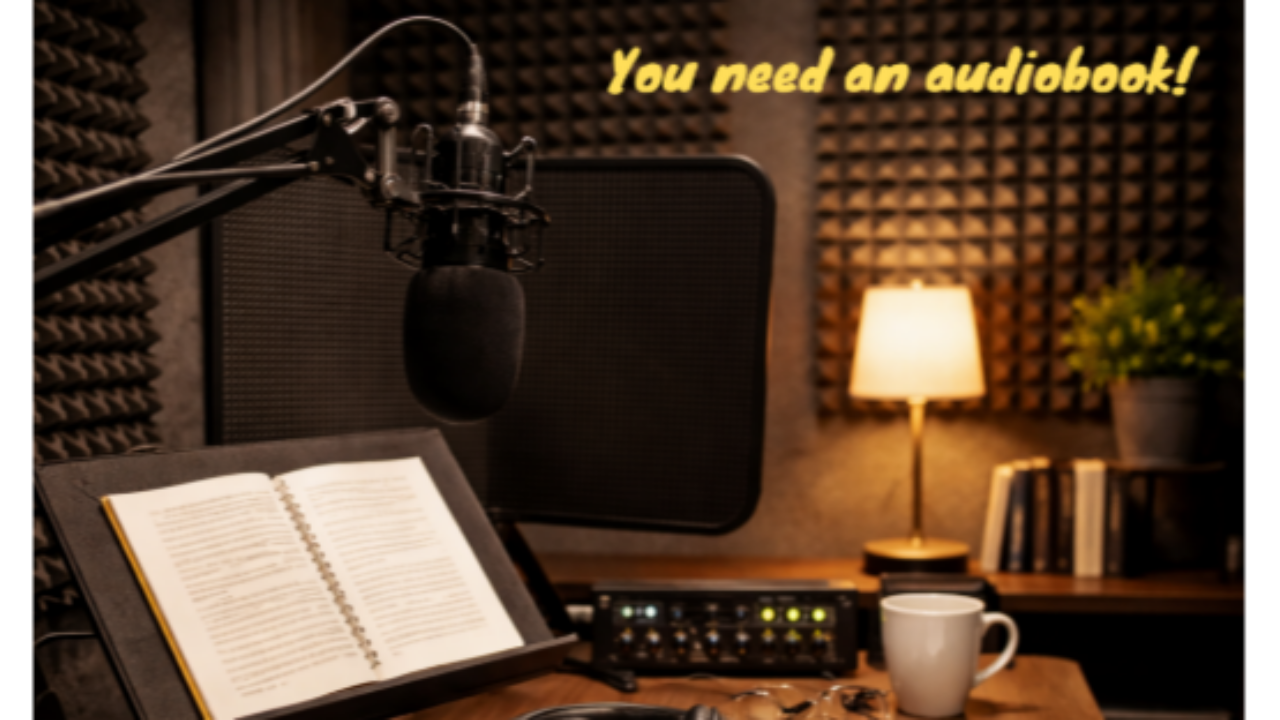
With social media and short-form content overloading our attention spans, the way readers consume books has fundamentally shifted. While the market for traditional books has seen a steady decline over the past few decades, the demand for audiobooks has skyrocketed, making them an absolutely non-negotiable component of your author journey.
During our recent interview on The Story Cure podcast, Mary Catherine Jones, CEO of the Audiobook Experience, highlighted the staggering growth of this format. She noted that while the audiobook market stood at around $420 million a decade ago, it reached $2.2 billion by the end of 2024 and is projected to explode to $20 billion by 2030. That’s nearly 5,000% growth!
Beyond the numbers, audiobooks offer a unique way to capture an audience that prefers "reading with their ears" during daily tasks like driving, gardening, or folding laundry. So, how to go about it?
For authors of memoirs and thought leadership books, Mary Catherine argues that narrating your own book is essential because you are the one to deliver the message. She shared a powerful insight regarding the emotional impact of this process, stating: “telling the story with your own voice also helps complete the healing process.” By reading your story aloud, you can move beyond the initial healing found in the writing process and rewire your brain even further.
However, creating a professional audiobook is more complex than simply recording it in a closet! Mary Catherine warns that technical standards for audiobooks are much stricter than for podcasts, and major platforms like Amazon—which accounts for roughly 65% of the market—will reject files that do not meet specific production specs. It is "absolutely critical to work with an experienced producer to ensure your files aren't kicked out due to issues with noise floors or spacing,” she says. A professional production not only ensures distribution, but also uses effects to make your voice sound fuller and richer, enhancing the listener's experience.
Finally, an audiobook is not just a recording. You can see it as a versatile collection of assets that you can use to amplify your platform. You can "spin" your content (that’s my trademark phrase!) by using high-quality audio clips for Instagram reels, TikTok, or as audio samples when pitching yourself for speaking engagements.
Mary Catherine suggests that you also consider including exclusive bonus material to drive listeners to your website for downloadable resources, effectively turning your audiobook into a powerful lead magnet.
If you want your story to reach its full potential, it’s time to stop viewing audio as an extra and start seeing it as a cornerstone of your authority. Hit “reply” if you’d like an introduction to Mary Catherine today.
Aloha,
MeiMei
TIP OF THE WEEK:
Practice Reading Aloud
Whether or not you’re ready to start recording your audiobook, you’ll benefit from reading your writing aloud. You don’t even need to have an audience!
Just pull out your manuscript and start reading. Listen to how your words sound when spoken rather than written.
You may want to make some edits.
Regardless, you’ll rewire your brain. So that’s a win!
|
|||
  |
Get Weekly Tips for Writing & Publishing Your Book
Sign up below to receive The Next Chapter, the actionable free newsletter for high performers who are ready to become published authors, straight to your inbox every week.
Delivered weekly on Sundays. No spam, ever. Unsubscribe at any time.