
Mother & Daughter + Human & Robot = Book
Jun 27, 2026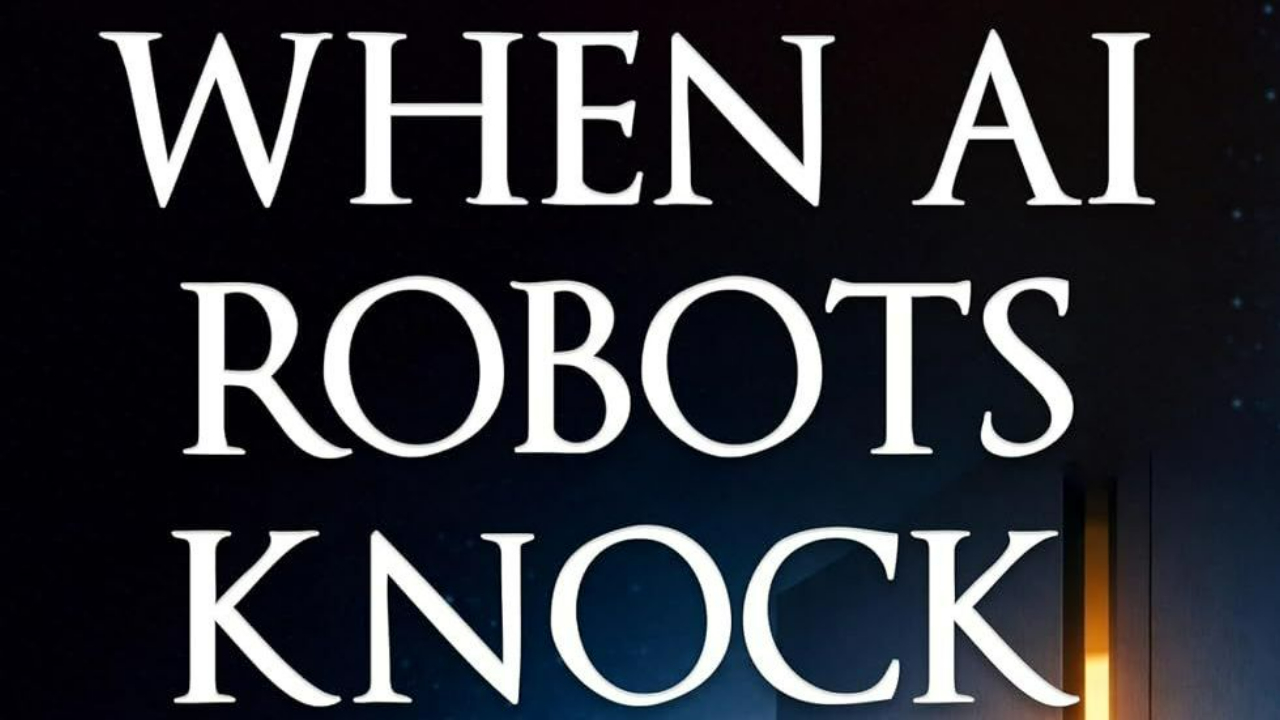
Last summer, Anu Ramraj, a former PricewaterhouseCoopers partner turned AI entrepreneur, and her daughter Avanti Ramraj, a Stanford student, teamed up to write a book about what artificial intelligence is doing to the job market. They leaned heavily on LLMs to help generate an outline, transcripts, a first draft, and to polish grammatical errors. But in between start and finish, they also made the critical choice to spend a great deal of their own time and effort to re-write that first draft, and they hired me as their book coach and editor. They also embarked on a laborious human fact-checking journey, which you’ll find out more about soon.
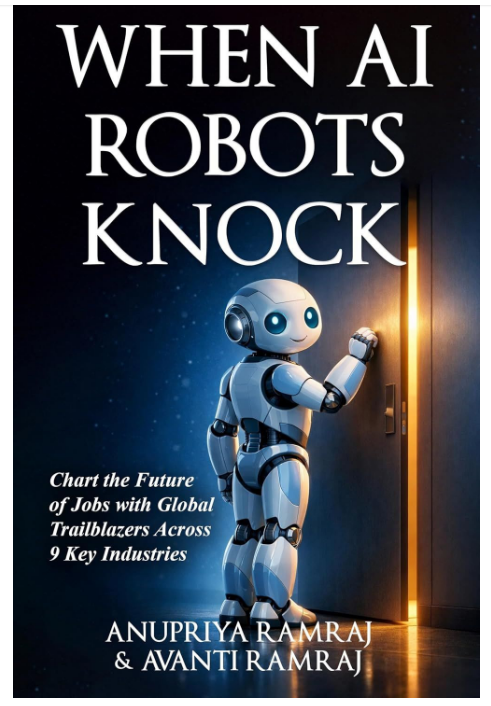
The result was worth the effort. Their newly-released book, When AI Robots Knock, has risen the ranks to #1 Amazon bestseller!
The duo came to this project neither as AI evangelists or doomsayers, but as two people genuinely interested in reckoning with the uncertainty of what’s next for the modern workforce. Anu had left her partnership at PwC to launch an AI startup, so she was sitting smack in the middle of the upheaval. Avanti was watching it from the sidelines, trying to decide what career to pursue as AI reshaped the landscape before her eyes.
As Avanti put it, “We thought it was an important moment to advise people and break down some of the fears related to AI that we were seeing with fellow students and with fellow professionals who felt that their careers were being transformed.”
As they dove into writing the book, they did what I always tell my authors to do. They started with the questions they most wanted answered:
- Which jobs are likely to disappear?
- How will existing careers in industries such as law and medicine change?
- How will our broader systems of government and policy evolve to keep pace?
Then they went out and interviewed experts — not AI experts, but industry experts — across a variety of fields including creative arts, government, tech, medicine, law and more. Anu and Avanti asked each of these people to reimagine their own fields on a five, ten, and 20-year timeline.
The approach turned out to be harder than expected, because many of the people they interviewed resisted making any specific predictions. “A lot of the interviewees were like, this is all changing so fast that we don’t want to commit!” Anu said.
The takeaway that stayed with Anu most from the book interviews came from a startup founder who coined the term “the human premium.” As AI handles more and more of the transactional, repetitive, and analytical work in any industry, the distinctly human element of a job will become rarer and therefore more valuable. “Companies will actually start charging more for the human premium,” Anu explained, “and that'll distinguish the top tier companies from the companies that only do it the AI way.”
The mother-daughter duo also pointed to genuinely sobering moments in their research, including “the very, very dark statistics around deaths by suicide that have been linked to vulnerable users forming deep emotional dependencies on AI chatbots.” Governments and corporations will have to engage in public conversations about AI regulations and guardrails, they said.
As for the act of writing the book, Anu admitted that she had underestimated the work involved. Even with transcription tools and AI-assisted research, assembling the manuscript still proved genuinely hard. In particular, she had to check statistics and source citations by hand because she discovered AI hallucinations.
“What I thought would be the easy part actually turned out to be a lot of work,” Anu said. “I had to go back to every one of those references, read them, double check the numbers.”
That is, of course, one of the most important lessons any author can take away from the age of AI. The robot will help you. The robot will also lie to you with complete confidence. Anu, Avanti and I all agreed: the human still has to be in the loop.
Book promotion hasn’t been easy either, Anu said. “It’s more than half the work!” (Something I always warn my book coaching clients about!) For their launch, she and Avanti were able to host a live event for 75 people in Sacramento. They have since spoken at UC Davis and done numerous podcast interviews. They hope to continue making an impact in months to come.
All this hard work has paid off, however! When AI Robots Knock already has reached #1 on Amazon in the career category, traveled to India where it’s being printed more affordably to reach a broader audience, and attracted the interest of a South Korean podcaster with millions of followers, prompting Anu and Avanti to start thinking seriously about a Korean translation. Soon it will hit the shelves of the Stanford Bookstore.
When AI Robots Knock by Anu and Avanti Ramraj is available on Amazon now. Check it out!
Hit Reply and tell me: has AI already changed your career in ways you didn't see coming? I'd love to hear your story.
Aloha, MeiMei
TIP OF THE WEEK:
Fact-Check Every Statistic and Citation
If you are using AI to help with research, as Anu and Avanti did, build into your editing process one dedicated pass where you verify every number, statistic, and attributed quote against its original source.
AI hallucinations tend to cluster around specificity, meaning the more precise a figure sounds, the more likely it was invented.
Set aside a few days to go back to the original studies, articles, and reports to confirm data. And if you have footnotes, definitely double-check these.
Your credibility as an author rests on the accuracy of your claims. Only you can protect yourself.
Quote of the Week
"We wanted a book to make it into a permanent thing... to turn our knowledge into a legacy and into a physical piece of work."
— Avanti Ramraj, When AI Robots Knock
Get Weekly Tips for Writing & Publishing Your Book
Sign up below to receive The Next Chapter, the actionable free newsletter for high performers who are ready to become published authors, straight to your inbox every week.
Delivered weekly on Sundays. No spam, ever. Unsubscribe at any time.