Microdramas: The Next Big Opportunity for Authors?
Oct 31, 2026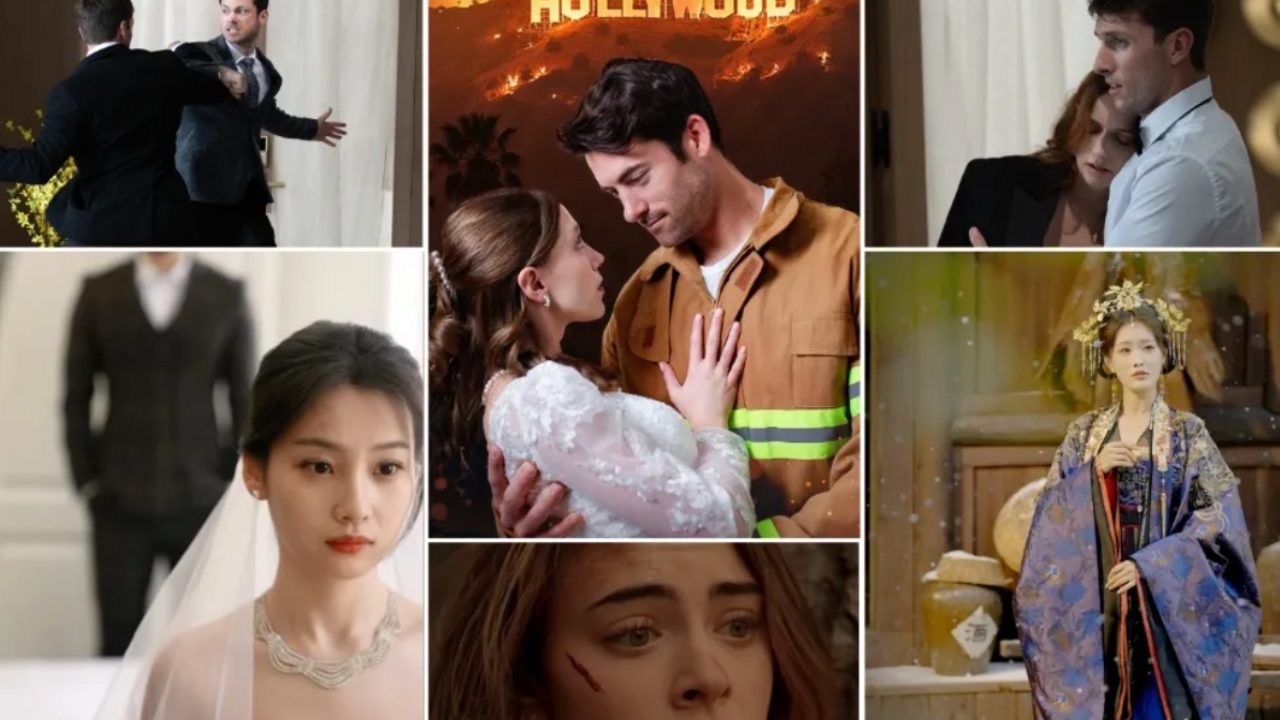
Microdramas: The Next Big Opportunity for Authors?
SEO Title: Microdramas: A New Storytelling Opportunity for Authors
Meta Description: Microdramas are taking over TikTok and streaming platforms. Could this fast-growing format be the next opportunity for authors and storytellers?
I fell down a rabbit hole this week, and it has me thinking about the future of storytelling.
Have you heard of microdramas?
They're essentially soap operas made for your phone. Shot vertically, with episodes that rarely run longer than two minutes, they're packed with outrageous twists, dramatic reveals, romance, secret identities, and cliffhangers designed to keep viewers watching.
Think titles like Found a Homeless Billionaire Husband for Christmas and Married a Mafioso. The stories are unapologetically dramatic, and the episodes are built around one simple goal: make you want to watch the next one.
But here's why authors should pay attention.
Microdramas are built on storytelling fundamentals
The format might feel new, but the storytelling techniques are anything but.
Microdramas rely on familiar tropes: enemies-to-lovers, forbidden relationships, secret identities, unexpected inheritances, and dramatic reversals. Every episode needs a strong hook, and every ending needs a reason for the audience to keep watching.
Sound familiar?
These are the same tools novelists use to pull readers through a story. The difference is the format and the speed.
You could think of microdramas as serialized fiction for the TikTok generation. The episodes are short, the emotions are big, and the audience is always waiting for the next reveal.
For authors, that creates an interesting possibility: your stories could reach audiences in a format you may never have considered before.
Your book could be the beginning, not the final format
When film producer and author Laura Malin spoke to the Your Bestselling Book cohort this summer, she explained how a book can be the first rung on an intellectual property ladder.
A story doesn't have to stay between the covers of a book. It can become a film, a series, an adaptation, or something else entirely.
Microdramas could be another rung.
And while the format is attracting enormous audiences, there's still room for writers who understand character, emotional tension, originality, and the craft of storytelling.
That's where authors have something valuable to contribute.
But there's a catch: What happens when the algorithm takes over?
The growth of microdramas isn't necessarily a celebration of great writing.
As the New York Times article that sent me down this rabbit hole explains, much of the genre is criticized for being low-quality, formulaic, and increasingly reliant on AI-generated scripts.
Some scripts are machine-translated from Chinese with very little human editing. One guide for aspiring writers even recommends avoiding dialogue-heavy scenes, complex world-building, and anything that requires deep concentration.
And then there's the AI casting question.
One acting teacher quoted in the article described the ultimate director as an algorithm. Meanwhile, a platform owner reportedly plans to replace a significant portion of its actors with AI.
That's a lot to think about.
If the goal is simply to produce more episodes, faster, and at lower cost, where does the human storyteller fit in?
Could authors bring something better to the format?
I don't think the answer is to dismiss microdramas because some of the content feels ridiculous.
The audience is there. The format is growing. And the basic ingredients are familiar to anyone who has studied storytelling.
The opportunity may be for writers to bring more depth, originality, and emotional truth to a format that is currently dominated by speed and spectacle.
Imagine taking the central tension of your own book and turning it into a series of short, irresistible episodes. What would the first hook be? What would make someone stop scrolling? What cliffhanger would make them pay to see what happens next?
That's an interesting creative challenge.
Microdramas may not be every author's cup of tea. But they raise a bigger question worth considering: how many new formats might exist for the stories we're already writing?
Try this: Imagine your story as a microdrama
You don't need to write an entire series. Start with a small experiment.
Create the most outrageous, cliffhanger-filled title you can imagine for your book. Then write a one-line hook that makes someone want to watch.
If you're enjoying the exercise, try writing the first 90-second episode.
It's just a game, but it forces you to identify the tension at the heart of your story. And that's a useful skill in any format.
So, would you ever write a microdrama?
Does this feel like the next frontier for authors, or does the whole idea make you want to run for the hills?
I'd love to hear what you think.
Aloha,
MeiMei
Get Weekly Tips for Writing & Publishing Your Book
Sign up below to receive The Next Chapter, the actionable free newsletter for high performers who are ready to become published authors, straight to your inbox every week.
Delivered weekly on Sundays. No spam, ever. Unsubscribe at any time.