
How Writers Can Use Place to Make Their Stories Unforgettable
Aug 15, 2026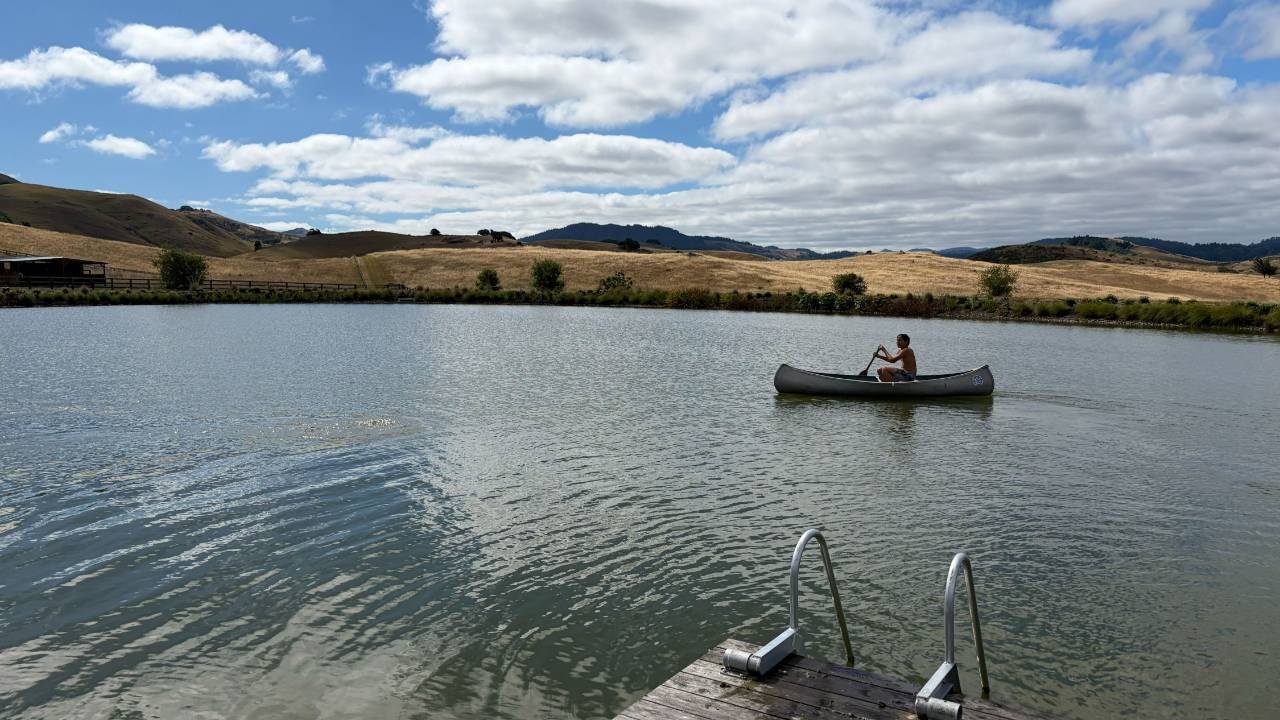
How Writers Can Use Place to Make Your Story Unforgettable
Since leaving Honolulu in early June, we've spent a few weeks in Northern California, landed in New York City, driven to Maine and back, and are now on Long Island visiting Kiran's friends and family.
Soon, we'll be on our way to Paris.
And in every airport, on every train, and in every unfamiliar hotel or guest bedroom, the same companions travel with me and my family:
Books.
Usually, I'm in the midst of ghostwriting or editing several nonfiction works at a time, which occupies a lot of my brain space. But this summer, I also get to enjoy reading and reviewing several novels, thanks to serving as a juror for Malin Entertainment's Adaptation Book Club.
I've always felt a particular kind of magic in reading in a new place, voyaging through new realms on the page while exploring a new physical world at the same time.
It turns out I'm not alone.
According to the New York Times, literary travel is on the rise. Travelers are booking what the travel world now calls "book-cations" and "readaways": trips built around a beloved novel's setting, an author's hometown, or simply a quiet place designed for reading.
Hotels are creating literary experiences. Resorts are hosting book clubs. Tour companies are tracing the routes of famous novels across countries and continents.
I'd like to think this means that the hunger for reading never left us.
Maybe it just got buried for a while beneath social media feeds and cellphone notifications.
And for writers, there's an important lesson here.
Place Is Power
Readers can fall in love with real-world settings because of the way you bring them to life.
You can make them feel the heat rising off the cobblestones.
The smell of freshly baked bread.
The sound of gulls calling overhead.
The differences in food, music, clothing, language, and culture.
When you write a setting well, the location stops being a backdrop.
It becomes part of the story.
Think about Manhattan in Candace Bushnell's Sex and the City or the Pacific Crest Trail in Cheryl Strayed's Wild.
These places aren't simply where the stories happen.
They help shape the stories themselves.
So when you're writing, don't think of setting as something you need to quickly establish before getting back to the "real" story.
Ask yourself:
What if this place were a character?
What would it contribute?
What would it reveal?
How would the story change if it took place somewhere else?
Your Setting Doesn't Have to Be a Physical Place
There's another way to think about location.
Your reader doesn't necessarily need to travel somewhere geographically.
You can invite them into a world they have never inhabited before.
Maybe it's the world of video game design, as Gabrielle Zevin explored in Tomorrow, and Tomorrow, and Tomorrow.
Maybe it's the world of Wall Street trading, as Michael Lewis explored in The Big Short.
Maybe it's a profession, a subculture, a family, a community, or an industry your reader knows very little about.
Your job is to make that world feel real.
Give readers a peek behind the curtain.
Show them the rules of engagement.
Let them hear how people in this world speak.
Show them the style, the habits, the pitfalls, and the opportunities.
The more specific you become, the more immersive the experience becomes.
Make Your Reader Want to Go There
The best settings don't simply tell us where a story takes place.
They make us want to be there.
That's the power of sensory detail.
Instead of telling your reader that a restaurant was beautiful, show us the chipped blue plates stacked behind the counter, the smell of garlic and butter hanging in the air, and the sound of glasses clinking from the table beside you.
Instead of saying a neighborhood was old, show us the cracked stone steps, faded signs, and vines pushing through the walls.
Specificity creates atmosphere.
And atmosphere creates memory.
The Tip of the Week: Describe a Destination
Try this exercise with your own writing:
-
Pick one location, real or invented.
-
Set a timer for ten minutes and write about it using all five senses. What does your character see, hear, smell, taste, and touch?
-
Cut generic words like "beautiful," "nice," and "old." Replace at least one with a concrete, specific detail.
-
Read the passage aloud and ask yourself: "Does this make me want to go there?"
If the answer is no, keep going.
Your goal isn't simply to tell your reader where they are.
It's to make them feel like they've arrived.
The Bottom Line
Whether you're writing about Paris, a small-town diner, Wall Street, a hospital, a family kitchen, or an entirely fictional universe, your setting can do much more than provide a backdrop.
Build a world your reader wants to inhabit.
Because sometimes the most unforgettable part of a book isn't just the story.
It's the place where the reader got to live while reading it.
Get Weekly Tips for Writing & Publishing Your Book
Sign up below to receive The Next Chapter, the actionable free newsletter for high performers who are ready to become published authors, straight to your inbox every week.
Delivered weekly on Sundays. No spam, ever. Unsubscribe at any time.